A buying worksheet for VPN privacy claims
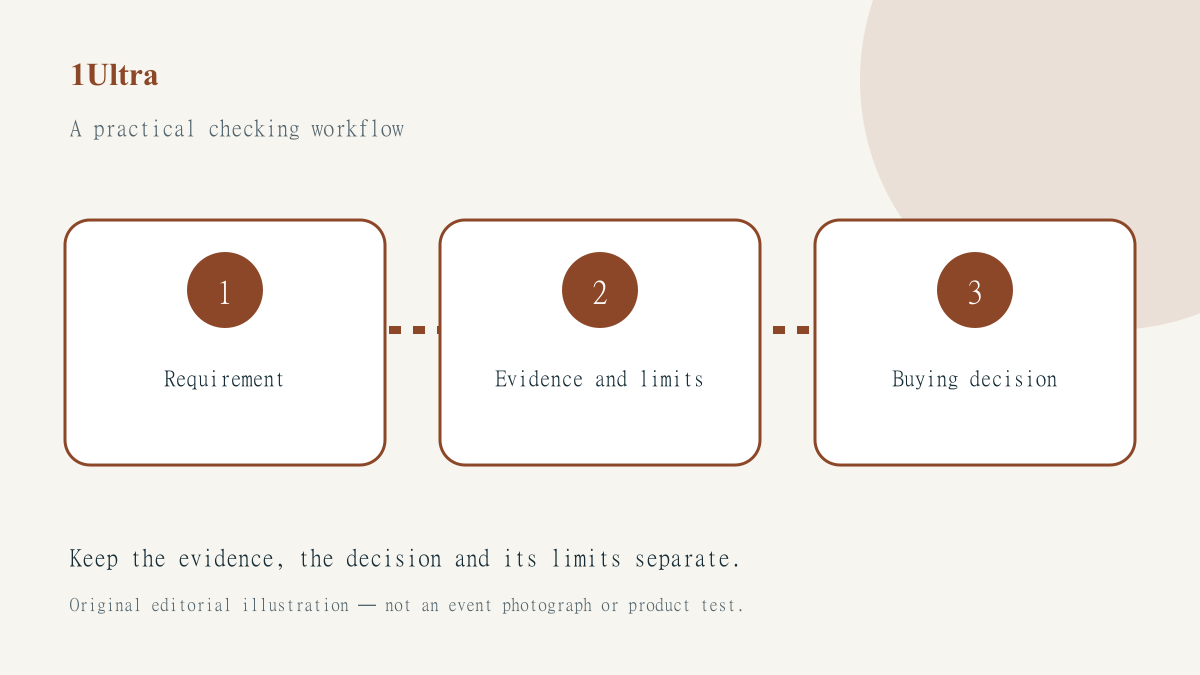
A VPN comparison can look rigorous because it contains many ticks, yet tell a buyer very little about what those ticks mean. Terms such as private, secure and anonymous are too broad to evaluate without a stated activity, observer and product condition. Before using them to shortlist a service, turn each important claim into a question that evidence could actually answer.
The explanation of VPN capabilities and limitations is a useful starting point. This article offers a claim worksheet rather than a product ranking. It does not report independent security testing, certify a provider’s privacy practices or promise that one service removes every risk.
Name the activity and the concern
Write down what you intend to do and what you are concerned about. Accessing an account, sending a file, using a public network and publishing information on a profile are different activities. A product may address part of one workflow without answering the whole privacy question. Keep the requirement narrow enough that you can identify the relevant documentation or test.
For a hypothetical buyer, the worksheet might say: I want a documented connection method on my supported laptop when using a venue network. That is more useful than wanting complete privacy everywhere. It makes platform support, current release availability and network setup relevant checks without pretending that the product decides whether a destination website or recipient is trustworthy.
Separate provider statements from independent evidence
Label each source by what it actually is. A provider page can describe an advertised feature. A hands-on review can report a particular observation if its method is clear. An audit can address a defined scope and date. None should be silently expanded into proof of every claim a comparison writer would like to make.
When researching JungleVPN, use its current information and retain the exact question you are trying to answer. This publication does not turn an owned-network link into independent verification. If an essential claim lacks suitable evidence, mark it unresolved rather than creating a favourable score to complete a comparison table.
Ask what changes across devices and releases
Check whether the documentation applies to the actual operating system and version you will use. A feature described for one platform should not be assumed on another. Record the current installer route and any stated conditions. Avoid treating a screenshot or a product-family name as proof that every release has identical behaviour.
The public Wi-Fi preparation routine also shows why the surrounding workflow matters. You still need to identify the venue’s legitimate network and sign-in process, verify the destination and maintain account protection. A paid subscription does not eliminate those responsibilities.
Evaluate tests within their stated boundaries
If you perform an authorised check, record the method, time, device and observed result. A website loading is evidence that the website loaded. An IP-location result can provide context without proving every application’s route, a precise physical location or universal anonymity. Keep the explanation beside the result so it does not become a misleading green tick later.
For failures, use the structured troubleshooting workflow. Change one authorised variable at a time and retain the earlier setting where needed. Do not count a connection obtained by bypassing certificate or device protections as a successful ordinary-use test. An unresolved failure can be a valuable buying-research result.
Use the worksheet to narrow the decision
Give each essential requirement its own acceptance condition. For example, documentation located is a different state from supported release installed and an authorised ordinary-use check completed. Keeping those states separate makes it harder for a glossy feature comparison to conceal the one unresolved condition that would make the purchase unsuitable for your actual task.
A useful final table has requirement, available evidence, limitation and next action. It does not need a numerical winner where the evidence cannot support one. Compare the actual commitment and conditions of the shortlisted product, and seek the provider’s clarification where a material detail remains unclear. This guide does not supply invented prices, legal assurances or performance measurements.
Our research-first approach is designed to make a decision explainable. The goal is not to collect the longest list of security words, but to understand which documented capabilities serve your own task. A careful buyer can recognise the value of a limited tool without treating its marketing language as a promise of total protection.