Buying a TV for football? Verify the viewing plan first
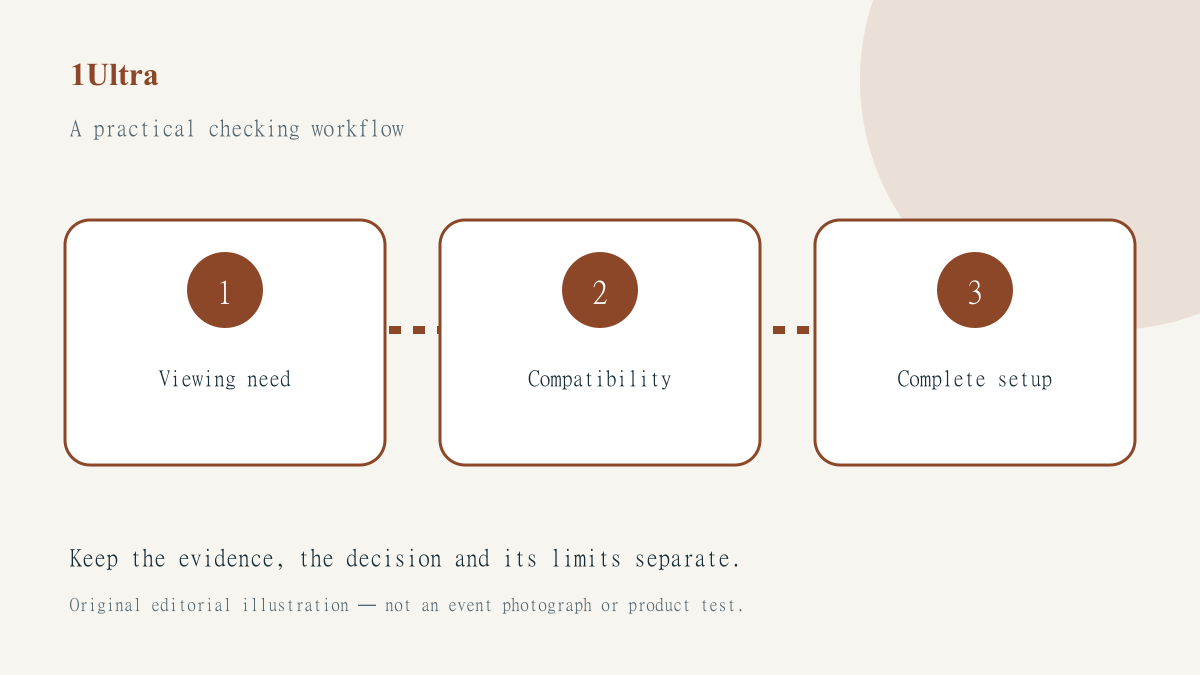
A larger screen does not solve an unavailable football programme. Before comparing televisions, streaming devices or display accessories for a specific sporting plan, check the service and viewing arrangement the equipment is expected to support. Otherwise a buyer can spend time evaluating picture specifications while the central requirement remains unverified.
The official-broadcaster checking guide is a useful starting point. This article turns that check into a pre-purchase brief for a hypothetical household viewing setup. It does not recommend a model, report a laboratory test or guarantee that a particular device or platform carries a current match.
Start with the viewing requirement
Write the actual use case in one sentence: which event or competition matters, where the viewer will be, how often the setup will be used and which device currently provides access. A broad phrase such as good for football can conceal several different needs. A person watching one occasional programme may make a different decision from someone building a regularly used room setup.
Identify which requirements are essential and which are preferences. For example, service compatibility may be essential while a larger screen is a preference. Do not let an attractive preference displace a missing essential check. The shortlist should begin only after you understand what the proposed equipment must actually do.
Verify the programme separately from the hardware
Use the fixtures listing to identify the sporting event, and the sports TV guide as a viewing-research route. Then check the relevant provider’s own programme and account information. Keep the country and the programme status visible in your notes: live coverage, replay and highlights are different uses.
A device manufacturer’s logo strip is not proof that an application, account or specific programme is available to every buyer. Read the current provider instructions for the model, operating system and region under consideration. A review of a similar model or a product sold in another country may provide background without establishing your exact compatibility question.
Build a compatibility worksheet
Make one row per shortlisted product. Record the exact model identifier, intended application or connection method, current compatibility evidence and any unresolved condition. Keep marketing wording separate from a documented requirement. If a specification matters to the decision, retain the manufacturer’s actual page rather than copying a shortened claim from a shopping card.
Check how the proposed setup fits the equipment you already own. A new display may still depend on an existing device, connection or account. Avoid describing an entire chain as supported because one component appears on a list. This is a research method, not a substitute for the product instructions or an appropriate technical installer where one is needed.
Evaluate the demonstration honestly
A shop demonstration can help you assess the particular conditions shown, but it is not automatically a test of your home arrangement. Ask what source, settings and content are being demonstrated before drawing conclusions. If a reviewer reports hands-on results, check which exact model and method were used. Do not treat an attractive promotional clip as measured evidence of every viewing scenario.
Keep practical considerations in the brief too: readable menus, accessible controls, viewing position and how ordinary users will start the correct programme. The best specification on paper may not be the most manageable arrangement for the people who will actually use it. A simple, understood workflow can matter more than another feature that nobody has established a need for.
Review the complete commitment before buying
As a final check, ask another household user to describe how they would reach the intended programme from the ordinary home screen. If the answer depends on an unsupported app, an unclear account or instructions known only to the researcher, the proposed setup is not yet an established solution to the original viewing need.
Check the actual seller’s delivery, support and return information for the product you select, without assuming a universal entitlement. Include the service commitment and necessary accessories in your own comparison. This guide supplies no invented prices, discounts or performance rankings. Its value lies in making unresolved requirements visible before money is committed.
Use SportsFixtures for the sporting context and provider routes, then decide what equipment genuinely serves the confirmed plan. Our research-first publication does not turn an untested product into a recommendation. A sensible shortlist connects a real viewing need to documented compatibility, rather than treating a bigger screen as proof that the whole plan will work.