Product launch coverage is not always independent testing
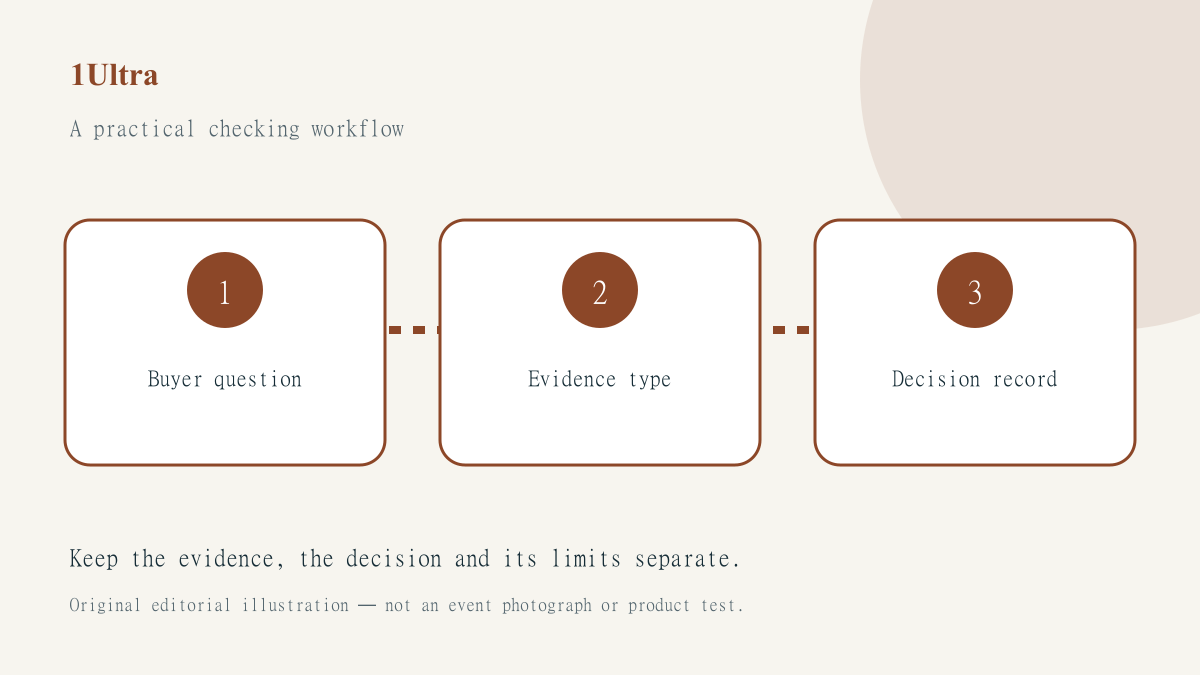
A product launch can produce a sudden wall of positive headlines. That may reflect genuine interest, but it does not mean that every article contains an independent hands-on test. A careful buyer asks what work lies behind each statement before using the apparent volume of coverage as a reason to purchase.
The distinction in the news-aggregator explainer helps organise the research. Discovery tools can collect attributed coverage, while the buyer still needs to examine the reporting. This 1Ultra guide proposes a source worksheet, not a product ranking or a claim that a particular publication is reliable in every circumstance.
Write the buying question first
Define the requirement the product is expected to meet. A vague question such as is it good invites an unstructured collection of opinions. A narrower question about a documented feature, a workflow or compatibility makes it easier to identify useful evidence. Keep your own need separate from the manufacturer’s preferred marketing story.
Decide which unanswered question would change the purchase. If the essential requirement remains unclear, several favourable articles about other features may not help. Record the uncertainty explicitly rather than allowing an overall impression of enthusiasm to stand in for the missing fact. A legitimate product can still be unsuitable for a particular buyer’s use.
Classify the type of coverage
For each item, record whether it is an announcement summary, reported interview, analysis, opinion or hands-on evaluation. Read the article rather than relying on the headline. A launch story may accurately describe the manufacturer’s claims without having tested them. That does not make the story worthless, but it changes what a buyer can reasonably infer from it.
Use the coverage-comparison method to trace shared sources. If several articles repeat one announcement, group them under that origin. Count the new evidence each contributes instead of counting headlines as independent votes. A shorter report that explains a relevant limitation may help your decision more than several longer summaries of the same feature list.
Look for the method behind a test claim
Where an article describes testing, look for the exact product version, conditions, method and result. Ask whether those conditions resemble your own intended use. A clearly described observation can be valuable without proving every possible scenario. Avoid expanding a narrow test result into a universal claim about the product.
Keep disclosures and commercial context in the record. A provider information page, a sponsored placement and an independent editorial test serve different purposes. This guide does not assume that any one label automatically establishes truth or falsehood. The useful question is what evidence supports the particular claim you are using and what relevant limitations have been disclosed.
Check pictures and screenshots separately
A product image can be a rendering, a stock illustration, a prototype photograph or a screenshot from another version. When its context matters, follow the image-context checking routine. A recent article can contain an older image, and an impressive interface picture is not proof that the buyer will receive the same feature in the same release.
Retain captions, credits and version labels in your notes. Do not copy an image into a public comparison without appropriate permission. The evidence question and the reuse-rights question remain separate. A buyer can learn from an image without treating it as measured proof or assuming permission to republish it.
Build a decision record, not a popularity score
Consider a hypothetical feature mentioned in four launch articles. If all four cite one manufacturer’s statement and none describes testing, the worksheet should contain one advertised feature claim with four coverage links, not four tests passed. The next useful step is evidence about your requirement, not another summary repeating the same announcement in different words.
A simple final worksheet can show requirement, supporting evidence, uncertainty and next check. It should explain why the shortlisted option fits the need, not merely how many favourable pages were found. If evidence remains insufficient, delaying a discretionary decision can be more reasonable than inventing a confidence rating to complete the table.
Explore attributed reporting through NewsBeagle and retain links back to the publishers behind the useful claims. Our editorial policy explains why this publication distinguishes research guides from hands-on reviews. Better buying research is a traceable explanation of a choice, not a vote count assembled from repeated launch coverage.